Property Taxes Are Climbing Across the Calgary Region: What It Means for Buyers and Sellers in 2026
Property taxes climbed across Calgary and every surrounding community in 2026, mostly because of a provincial education tax hike. Here's how the increases compare by community, and what Calgary's proposed 2027 budget could mean next.
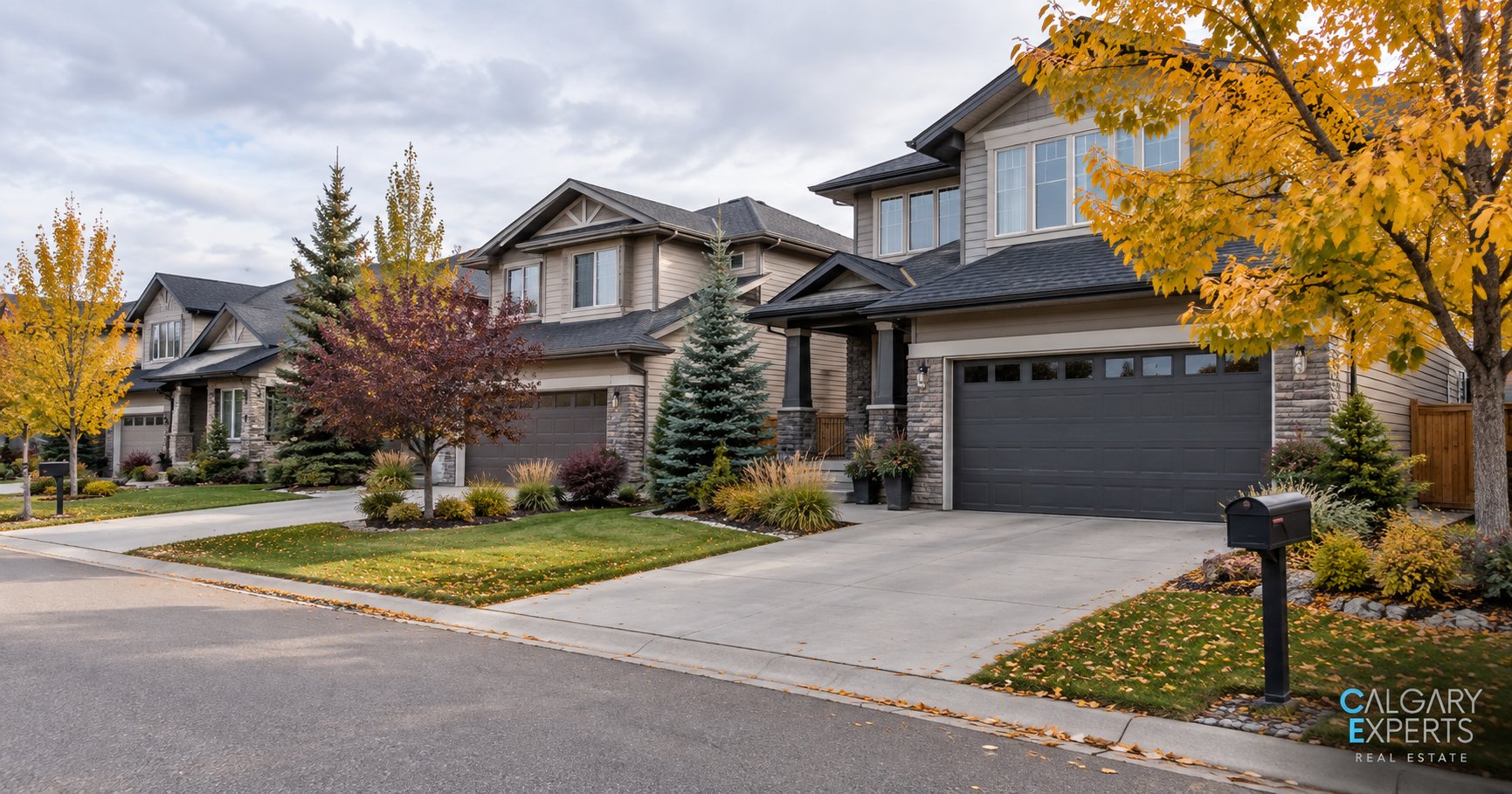
Property tax bills rose across Calgary, Airdrie, Cochrane, Okotoks and Chestermere in 2026.
A median-priced home in Cochrane picked up a $296 property tax bill increase this year, and by the town's own numbers, roughly 79 cents of every extra dollar went to the province, not to Cochrane itself. It is a pattern that shows up almost everywhere around Calgary right now, and it is worth understanding before you buy, sell, or budget for the year ahead.
Property tax bills rose in Calgary, Airdrie, Cochrane, Okotoks and Chestermere in 2026, largely driven by a jump in the provincial education tax requisition that every Alberta municipality is required to collect. On top of that, Calgary city council is now working through a 2027 budget that could bring another significant increase. None of this is dramatic on its own, but taken together it is a real number worth factoring into your housing math, whether you already own here or are deciding where to buy.
How Much Taxes Went Up in 2026, by Community
Here is how the increases compare across the region, based on each municipality's approved 2026 budget.
Calgary: An 8.1 percent overall residential increase, made up of a 1.2 percent municipal increase and a 19.8 percent jump in the provincial education portion. For a typical single-family home assessed at $706,000, that worked out to about $32.25 more per month, or roughly $387 for the year (finalized March 2026).
Airdrie: A 4.6 percent increase to the municipal portion of the bill, adding about $115 a year, or $9.59 a month, for a home assessed at $614,000. The provincial education portion is set by the province and was not yet known when council approved the budget (approved budget, December 2025).
Cochrane: A 7.15 percent total increase, averaging $296 a year on a median assessed home of $674,800. Of that, about $66 was municipal and $235 came from the provincial education requisition, while the Rocky View Foundation seniors' housing levy dipped slightly, to $37 from $42 (approved May 2026).
Okotoks: A 4.0 percent municipal increase plus an 18.6 percent jump in the provincial education tax, together adding roughly $390 a year on an average home assessed at $729,500 (approved May 2026).
Chestermere: The residential municipal mill rate rose from 3.248 to 3.573, adding about $227 a year, or $19 a month, on a home assessed at $700,000. The city attributes the increase to growth pressures as its population approaches 40,000 (approved May 2026).
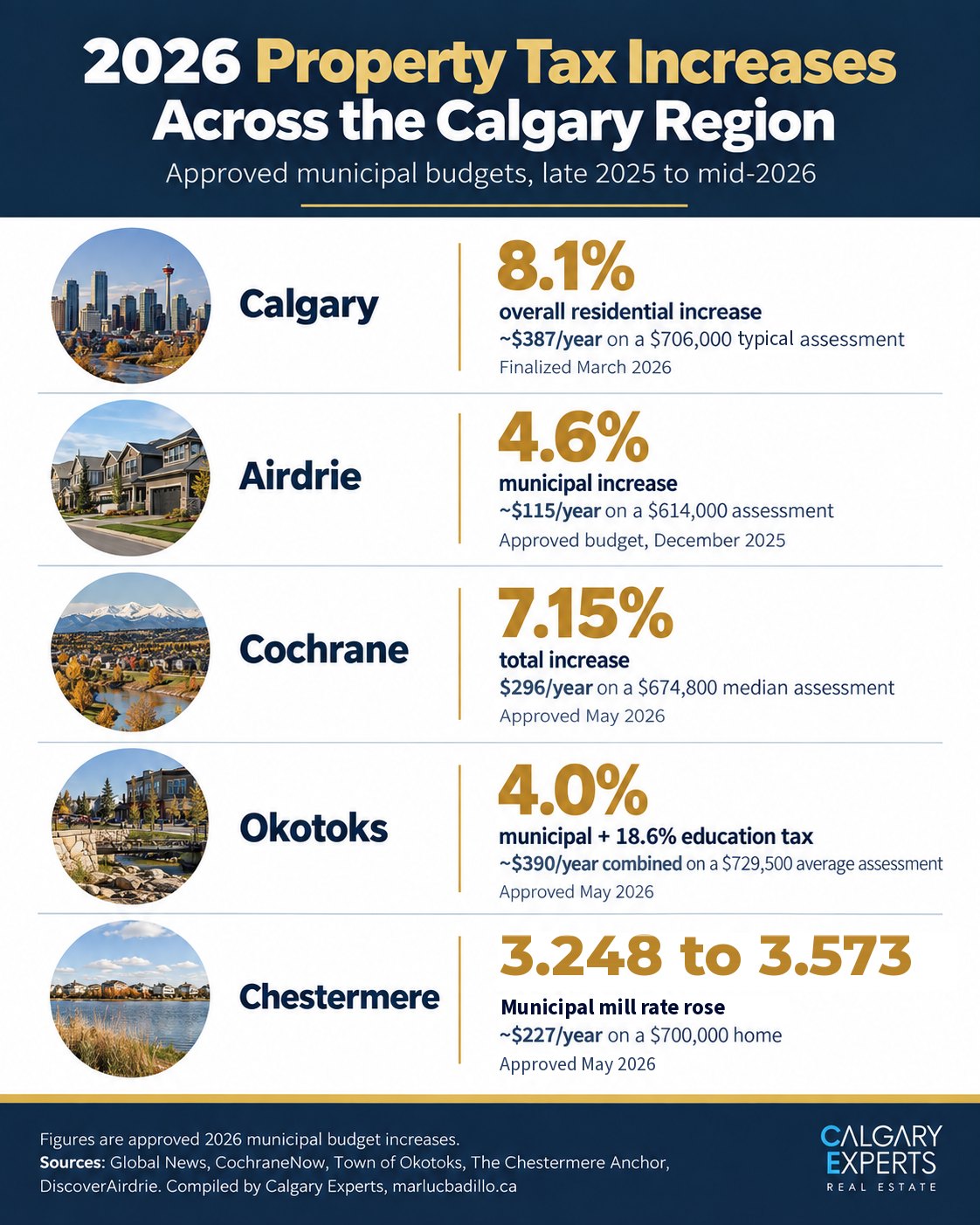
A theme runs through nearly every one of these budgets: the biggest driver was not town hall spending, it was the province's education tax requisition, which rose sharply across Alberta this year and made up well over half the total increase in several communities.
Why This Keeps Happening
Municipalities collect the provincial education tax on behalf of the Government of Alberta and pass it along, but they do not set that portion of your bill. When the province raises its requisition, as it did significantly for the 2026 tax year, every municipality in the region feels it regardless of how carefully local council manages its own budget. That is part of why Okotoks, which held its municipal increase to 4 percent, still saw a meaningful jump in the total bill, with more than 64 percent of the increase coming from the education tax.
What This Could Mean for Buyers
If you are comparing Calgary against Airdrie, Cochrane, Okotoks or Chestermere, sticker price is only part of the picture. A lower purchase price in a fast-growing town does not automatically mean lower long-term carrying costs, especially somewhere like Chestermere or Okotoks that may need to keep investing in roads, recreation facilities and emergency services as new neighbourhoods fill in. It could be worth asking any REALTOR® you work with to help you estimate what property taxes might look like on a specific address a few years out, not just today, particularly if you are stretching your budget to make a purchase work.
What This Could Mean for Sellers
Buyers are paying closer attention to carrying costs than they may have a couple of years ago, and property taxes are part of that conversation. If your community has had a noticeably larger increase this year, it may come up during showings or in offer negotiations. Being ready with a clear, factual answer, rather than being caught off guard, can help keep those conversations from becoming a sticking point. It also helps to remember this is a regional trend rather than something specific to one property or neighbourhood, so it should not be treated as a red flag on its own.
What to Watch Next
Calgary's 2027 budget process is the one to keep an eye on. City administration has said that fully funding every department request would require a 20.2 percent property tax increase, though council is also considering a phased alternative of roughly 15 percent in 2027, tapering to 12.5, 9 and 6 percent through 2030. Just maintaining current service levels, without any new spending, is estimated to need a 5.4 percent increase on its own. The budget is scheduled to be released publicly on November 10, 2026, with council deliberations beginning November 23. Whatever direction council chooses could shape how Calgary's overall cost of ownership compares to its neighbours for years to come, so it is worth watching if you are planning a purchase or sale in the next year or two.
The Bottom Line
Property taxes will not usually make or break a decision to buy or sell in the Calgary region, but they are a real and rising part of the cost of ownership that is easy to overlook when you are focused on mortgage rates and purchase price. Understanding how your community's increase compares to its neighbours, and keeping an eye on what Calgary council decides for 2027, can help you plan with fewer surprises.
If you have questions about how property taxes or other carrying costs factor into buying or selling in Calgary, Airdrie, Cochrane, Okotoks, Chestermere or the surrounding area, reach out any time. I'm happy to walk through the numbers for your specific situation.
Weighing Carrying Costs Across the Calgary Region?
Property taxes are just one piece of the ownership picture. We'll help you compare what a specific home in Calgary, Airdrie, Cochrane, Okotoks or Chestermere could actually cost you to own, not just to buy.
Book Your Free Consultation →Prefer to talk? Call or text (403) 630-9583
Related Articles
Sources
- Global News, "20.2% property tax increase required if Calgary funds all 2027 budget requests", published September 2, 2026. Read source
- Global News, "Calgary homeowners to see 8.1% property tax increase when finalized with provincial hike", published March 31, 2026. Read source
- CochraneNow, "Cochrane homeowners facing $296 average tax increase in 2026", published May 12, 2026. Read source
- Town of Okotoks, "Okotoks Council approves 2026 property tax rates", published May 11, 2026. Read source
- City of Chestermere, "City of Chestermere Approves 2026 Tax Rates", published May 26, 2026. Read source
- The Chestermere Anchor, "Chestermere Approves Property Tax Increase for 2026", published June 2, 2026. Read source
- DiscoverAirdrie, "What Airdrie's approved 2026 budget means for your tax bill", published December 9, 2025. Read source
Calgary Experts Real Estate, Operating as McBadillo Real Estate. Brokerage: Real Estate Professionals Inc. This analysis is based on each municipality's approved 2026 budget figures and public reporting on Calgary's proposed 2027 budget, and reflects information available as of the publication dates cited above. Tax rates and budgets can change; always confirm current figures with the relevant municipality before making a purchase or sale decision.